Geeks and fashion don't usually mix. Software engineers and other technology professionals are known for their reliance on t-shirts, sandals (often worn with socks) or sneakers and a predilection for wearing shorts in the freezing rain and snow. A bold fashion statement for most software engineers is making the decision to dye their hair green or blue.
But putting techie stereotypes aside for a moment, a new intersection point between the tech community and the fashion industry cognoscenti could be surfacing. The fashion industry is notoriously bad at product waste… and technology wants to come to the rescue.
Just hanging around
The BBC has reported one recent example where a fashion designer has helped to develop recyclable clothes hangers. Data analytics applied across fashion industry supply chains has shown the scale of waste in the business; designer Roland Mouret suggests that single-use clothes hangers are the 'plastic straw' of the fashion industry.
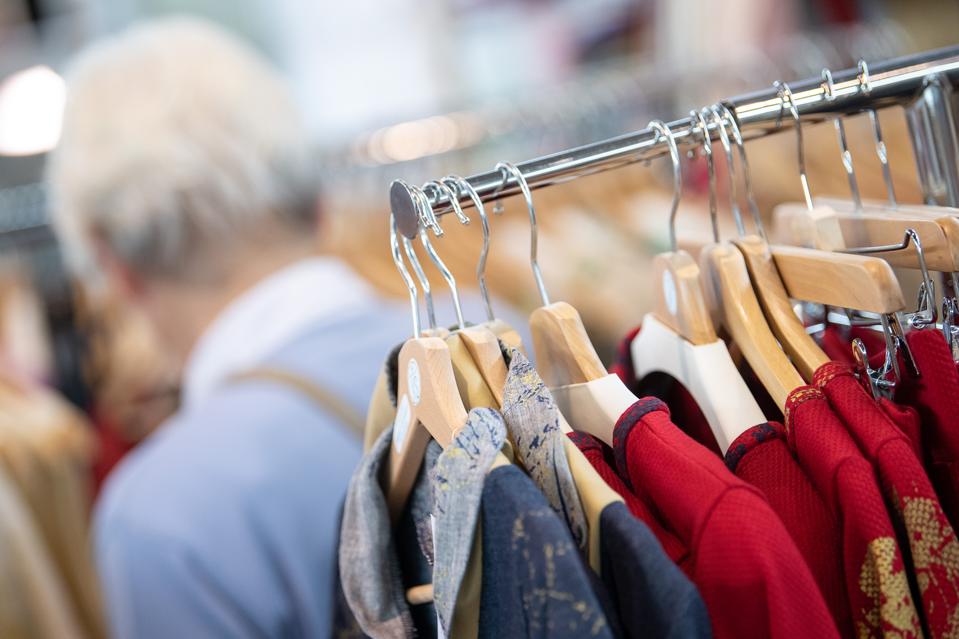
Working with scientists, Mouret and his team have developed a new hanger constructed from 80% recycled 'recovered sea plastic' and 20% recyclable plastic. The hanger problem is not just down to customers discarding them after purchase; apparently some fashion companies ship clothes on cheap hangers (which are then thrown away) before they transfer products to 'fancier' hangers in store.
Hanger recycling company First Mile says that hangers take 1,000 years to break down in landfill. Clearly we need smarter supply chains, smarter city distribution networks, smarter adoption of recycled products and smarter hangers if we are going to combat this waste.
Formal Dresses
Tuesday, January 21, 2020

Sunday, December 29, 2019
How Small- And Medium-Sized Businesses Can Get Started With Email Marketing
No, it's not the trendiest or most glamorous tactic, and no, you're not likely to win "Ad Campaign of the Year," but good old-fashioned email marketing can offer a tremendous return with minor investments of time and money — especially for small- and medium-sized businesses.
In my experience helping such companies grow and maximize their sales and marketing efforts, I've found that email marketing is a great way to test and measure messaging strategies, new markets or new niches before ramping up investment in paid ad campaigns, content creation, etc. It's a direct line of one-on-one communication with the customer — there aren't any middlemen or ad platforms to pay for every message or impression — and there's a low barrier to entry, since most of us are already collecting prospects' and customers' emails. To start collecting and organizing them in a systematic way and using them consistently is often as simple as activating some features in the customer relationship management system and website you already have.
Creating marketing emails doesn't have to be expensive or time-consuming either. Here's how to get started:
1. Start with the basic messaging and call to action.
Your team may already be sending great emails out on a daily basis; they're just sending them one at a time. Gather together the most frequent types of client emails your team sends, and use the best of what you already have for the main body of your marketing emails. This is a great starting point.
Then, you can fine-tune your emails to be specific to the different segments of customers that you cater to. I've found that the most effective campaigns are based on an ongoing series of messages targeted to very specific niches.
Sunday, November 24, 2019
Macao Is The Fashionable Playground For The Young And Rich In China
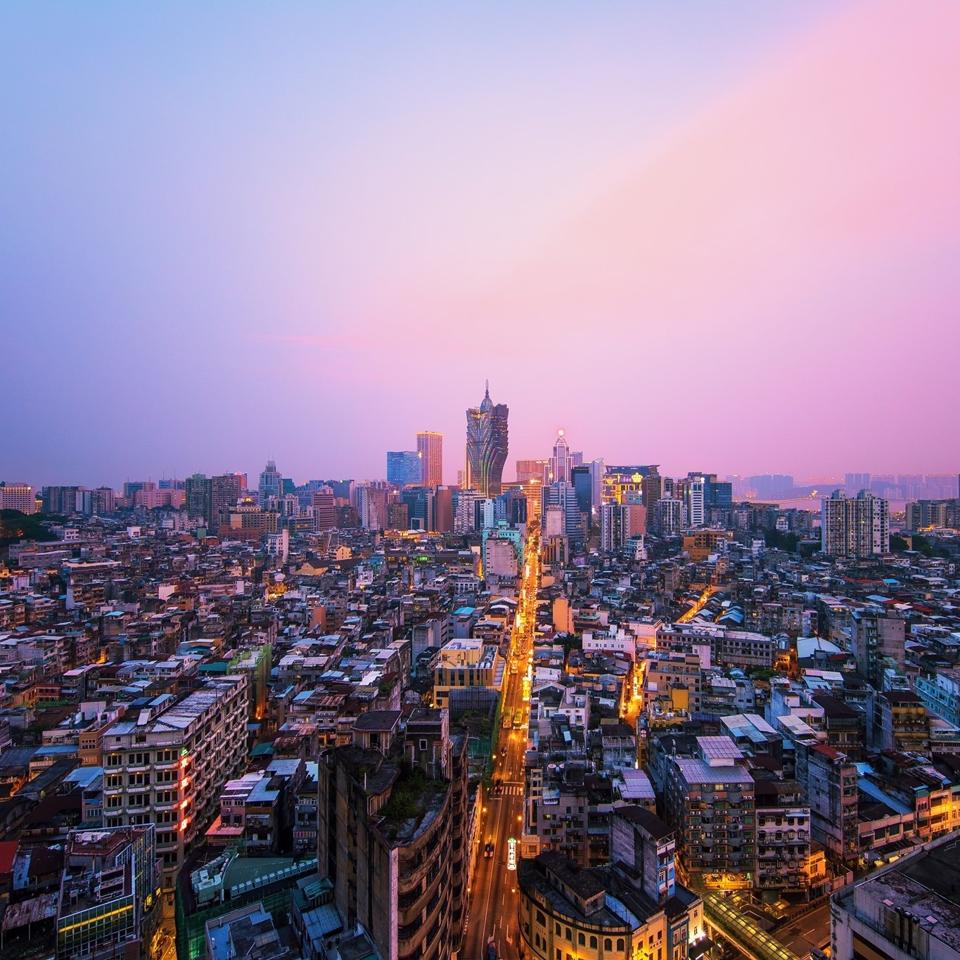
The mainland Chinese market has an insatiable appetite for all things beautiful and bespoke. According to Dr. Daniel Langer, CEO of Équité (a luxury, lifestyle and consumer brand strategy firm), they are the Nouveau Riche and “disrupting (the) luxury (industry) the most.” He explains that “the youngest customers now have the highest expectations toward luxury brands...in China, more than 80 percent of luxury goods are bought by consumers under 40, including a rapidly increasing share of Gen Zers, who are all 20 years old or younger.” And nowhere is this more apparent than in Macao, China - the “Vegas of Asia”- and a vast playground for the wealthy Chinese.
According to Lily Cheng (Director of Public Relations for Sands Resorts Macao) the number one demographic for those seeking a “staycation/getaway” are from Mainland China, who apparently have plenty of hedonistic desires in need of satisfying.
In trying to navigate the future of luxury, it’s been the objective of Sands Resorts and its family of brands to carve out an enduring space in an otherwise volatile market; so they are not only appeasing needs, but attempting to anticipate and anchor them as well. With 8 hotels (and growing) to choose from and their combined 12,000+ rooms, properties are frequently upgrading their respective “luxe life” to remain top-of-mind, experiential and “Instagram-worthy”. Moreover, “because competition is so keen in Macao - and the standards of hospitality so high - in order to differentiate ourselves, we need buildings and properties that are iconic and easily identifiable,” explains Joyce Chiu, Senior Public Relations Manager for Sands China Ltd.
For instance, since The Parisian Macao unveiled its sparkling and newly renovated Champagne Suites, they have been the most requested room category for the hotel.
Meanwhile, The Londoner Hotel (with plans to open progressively over 2020 and 2021) has soccer-star-turned-stylish-celebrity/philanthropist David Beckham acting as the face of the brand; he is also currently the ambassador to all of Sands Resorts Macao properties. The celebrity element is another strategy to ensure that there is frequent buzz and to update otherwise stagnant spaces in need of a facelift.
Bridesmaid Dresses
Sunday, October 27, 2019
More Consumers Want Sustainable Fashion, But Are Brands Delivering It?
With consumers being more environmentally conscious than ever, it's no surprise that sustainability has become a familiar refrain in the fashion industry. But are brands delivering on it? That's a different story.
Among mass-market apparel brands and retailers, only 1% of new products introduced in the first half of this year were tagged sustainable, even after a five-fold increase in the number of such items unveiled in the past two years, according to a McKinsey study released Thursday. "Apparel companies still have a long way to go to meet the demand for sustainability," said the report, titled "Fashion's New Must Have: Sustainable Sourcing At Scale."
While brands face issues such as the cost and availability of sustainable materials, more than half of the industry players want at least half of their products to be made with sustainable materials by 2025, according to the study, which polled 64 global sourcing executive with a combined buying power of $100 billion.
More than four-fifths of the executives also expect physical clothing design samples to be used far less often by 2025.
Even against the shadow of the U.S.-China trade tariffs war, sustainability and transparency surfaced as the top focus–more than double the percentage who cited shifting countries where they buy goods from–when executives were asked how their companies plan to adjust apparel sourcing to respond to macroeconomic trends.
Why? Getting sustainability right pays dividends as consumers, led by millennials and Gen Z, are demanding it: online searches for "sustainable fashion" tripled between 2016 and 2019, the report found.
Trouwjurken
Monday, August 5, 2019
Wedding Planning? Try These Sanity Savers
Preparing for a wedding can be an amazing, love-affirming time for couples — but it can also be incredibly stressful! Now that wedding season is about to be in full swing, you might be looking for any way to restore some peace and balance to your life. If this sounds familiar, don’t fret! Here are some products that could save your sanity during the lead up to the big day.
Pollyanna Kit
Still in the planning stages? You might be quickly realizing how difficult it is to keep track of all the details. Do you remember the name of the officiator? Which cake flavor did you prefer? Who was it that is allergic to all fish and seafood? There’s a lot to remember! Fortunately, there is a way to tame the madness.
The Pollyanna Kit allows you to stay organized and create your dream wedding while maintaining your sanity! You’ll receive both a digital and hardcopy planning checklist, a candle, dessert, essential oil, handwritten notes, temporary tattoos and a special DIY keepsake.
Migrastil Migraine Stick

Even when everything is going right, weddings can be overwhelming. When things do go wrong, it can quickly turn into a nightmare. You booked a trip to a destination during storm season and it’s non-refundable? You gained five pounds instead of losing them? Haven’t had enough to drink and didn’t have time to eat anything all day? Yeah, your temples might be throbbing!
Pollyanna Kit
Still in the planning stages? You might be quickly realizing how difficult it is to keep track of all the details. Do you remember the name of the officiator? Which cake flavor did you prefer? Who was it that is allergic to all fish and seafood? There’s a lot to remember! Fortunately, there is a way to tame the madness.
The Pollyanna Kit allows you to stay organized and create your dream wedding while maintaining your sanity! You’ll receive both a digital and hardcopy planning checklist, a candle, dessert, essential oil, handwritten notes, temporary tattoos and a special DIY keepsake.
Migrastil Migraine Stick
Even when everything is going right, weddings can be overwhelming. When things do go wrong, it can quickly turn into a nightmare. You booked a trip to a destination during storm season and it’s non-refundable? You gained five pounds instead of losing them? Haven’t had enough to drink and didn’t have time to eat anything all day? Yeah, your temples might be throbbing!
Wednesday, June 26, 2019
Microplastics Hurt Fauna From Zooplankton To Humpback Whales
Microplastics are found everywhere, from remote wilderness to the depths of the sea. They can alter growth of our agricultural crops. Recently, researchers Gloria Fackelmann and Dr. Simone Sommer of Ulm University conducted an extensive review covering how ingested microplastic causes an imbalance in the gut microbiomes of animals as tiny as zooplankton to as large as humpback whales.
As plastic breaks down, it forms microplastics, which are pieces less than 5 mm in length. Most microplastics are generated on land before being washed out to the ocean. The plastic packaging and clothing with synthetic materials corporations produce (and that we discard) is likely to find its way into the ocean and into the stomachs of marine life.
Zooplankton often mistake microplastics for food. Since zooplankton are near the bottom of the food web, microplastics can be concentrated as animals consume other animals, much like the bioaccumulation of DDT in bald eagles in the 20th century. Filter-feeding gooseneck barnacles also accumulate microplastics.

Thursday, May 30, 2019
Dauntless' Is A Solid, Free ‘Baby Monster Hunter
I have been vaguely hearing about Dauntless for a while now in some form or another, usually from my influencer buddies who have been toying with the beta every so often. I didn't really know what it was, and from afar I thought it looked like a Fortnite-skinned Runescape. I quickly was informed that it's a Fortnite-skinned Monster Hunter instead.
With The Division 2 not wanting me to play its raid and Destiny's next expansion still two weeks away, I dove into Dauntless for a spell to see how it was. I played a bit of Monster Hunter World previously, which I enjoyed, but the longer it went, the more convoluted it became, and I never got past its issues with UI and combat.
Dauntless solves most of that, and it does it for free, supported by cosmetic microtransactions and a battle pass, and a few elements that seem like they *could* veer into being a bit pay-to-win, but nothing all that extreme I've found yet.
This game is Monster Hunter, simply stripped down to its base elements. You're in a steampunk-ish fantasy town, you hunt monsters with a series of upgradable weapons, and farm specific monsters to make armor sets based on the materials you glean from them. There are potions, grenades, a few skills on cooldowns, but nothing terribly complicated, and you're able to hop in very quickly and just get in there and slay.
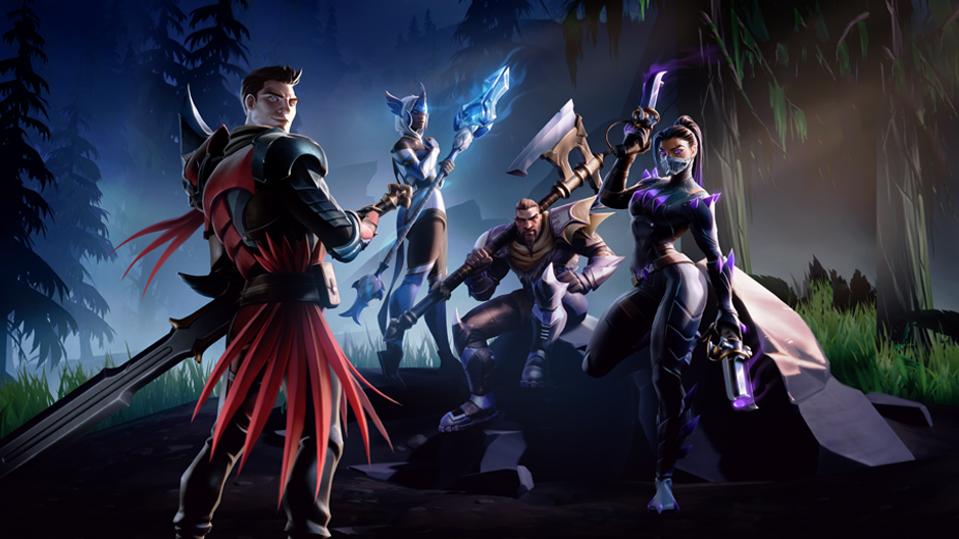
In one day I went from level 1 to level 11 and capped out a Shrike armor set and axe at the current max, given that neutral upgrade orbs were plentiful. I really, really like the character design and animation, which features a great character customization system and a transmorg system that I wish more games would emulate.
The combat-reward loop is solid so far. I've found myself able to craft a lot more things in a lot shorter period of time than I did with Monster Hunter, and I've enjoyed experimenting with the six different types of weapons, which don't feel overwhelming because there aren't like, two dozen of them. Each has their own distinct feel to them, and I'm looking forward to unlocking more upgrades for them in time.
There are some pretty clear limitations Dauntless has, however, despite emulating Monster Hunter for its core concept. This is a F2P game, while MHW is big-budget, triple AAA. The biggest place you notice this is during the hunts themselves which are giant, empty areas that at least at lower levels, contain nothing but the central monster itself. There are no sprawling MHW zones with smaller bits of wildlife around, and no multiple boss-level monsters on a map that spar with one another. Each zone is simply a boss fight with 1-3 phases, and you go back, rinse, repeat.
Subscribe to:
Posts (Atom)