With over 70 percent of 911 calls now being placed by wireless callers -- and no reliable way to pin a mobile phone number to a specific location -- it is difficult to see how next-generation mobile services can be life-saving. But they can, and here’s how.
Take, for example, the increase in Voice over IP (VoIP) phone services and 4G capabilities, such as sending an EMT a picture of an accident prior to their arrival or explaining emergency procedures with a caller via video. Such technologies can significantly improve mission-critical communication capabilities when data, images or video are transmitted in a 911 call to a Public Safety Answering Point (PSAP). Compare this with today’s emergency services (E911), in which the public can only make emergency voice calls or teletype calls, both of which only deliver a minimal amount of data, and it’s a no-brainer.
However, integrating Emergency Services IP Networks, or ESInets, with legacy networks requires that PSAPs be able to handle video, streaming, data, texts and voice – not to mention the critical ability to identify the location of a mobile or VoIP phone – which is no easy feat. So how are public safety leaders addressing the challenges of how to move to next-generation emergency services, and what do they need to know in managing the transition?
The Future of Emergency Calling Standards
In an effort to improve emergency communications, the Next Generation 911 initiative (NG911), spearheaded by the National Highway Traffic Safety Administration, offers great promise in dramatically improving emergency response capabilities. It has the goal of incorporating next-generation mobile capabilities into existing PSAPs as a way to expand the range of ways callers can transmit emergency information. In the NG911 environment, the public will be able to make a wide range of emergency “calls” including voice, text and video, from any device – wired or wireless – over Internet Protocol (IP) networks. In addition, PSAPs will be able to obtain data from personal safety devices like medical alert systems and sensors. Not only do these services support a constantly increasing mobile user base, but they also support the deaf and hearing impaired, who frequently communicate via text message, as well as non-English speaking callers.
The National Emergency Number Association (NENA) is also setting the stage for the future of emergency calling. Its recent approval of the i3 standard, a long-term plan to ensure that all public safety networks are transitioned successfully from legacy networks to next-generation IP networks, would allow for more advanced services like video, streaming, data, text and voice communications to be used in emergency calls. The protocol for delivering these “calls” across the ESInet will be the Session Initiation Protocol (SIP), or IP Multimedia Subsystem (News - Alert) (IMS, which incorporates SIP). The functional and interface standards developed by NENA describe general SIP and IMS-based architectures that offer agencies flexibility in developing an infrastructure to support the envisioned future (and features) of NG911 calling.
Public safety agencies are thinking about how best to transition to NG911, but with over 6,000 PSAPs in the U.S., transitioning every single PSAP from TDM to IP comes with its challenges – budget being top of mind. The goal of many PSAPs is to become part of a larger regional network that include other PSAPs, thereby reducing the CapEx and OpEx burden and leveraging shared resources to connect various emergency call centers. This could take place in a physical or virtual manner, with several counties working together to consolidate their physical networks, or via virtual IP networks. If executed correctly, the economic and operational advantages of NG911 networks will be significant.
The TDM to IP Transition
There are two options for transitioning from TDM to IP. The first option is for public safety agencies to run two networks in parallel – a TDM and an IP network – until they do the switchover. However, this is hardware-intensive, so it can be very expensive and inefficient.
The second option considers not just the replication of what their networks can accomplish today, but what their networks can accomplish in the future. That way, as new services are introduced they can build on their network rather than having to recreate it again in the future. This option entails implementing the right network equipment that can support both TDM and IP services, so that they can complete today’s E911 services, while transitioning to new NG911 services – without incurring capital expenses. As such, this is a far more attractive option.
Building on Existing Networks: What to Consider
In considering building on top of their existing network, PSAPs should be aware of key network features that can support both TDM and IP. These include the following:
Showing posts with label magazine. Show all posts
Showing posts with label magazine. Show all posts
Wednesday, November 2, 2011

Monday, October 31, 2011
Mobile application consultant Jonathan Stark
Mobile application consultant Jonathan Stark, author of two iPhone and Android development books, explains his process for determining the best development approach for an app and discusses the best tools available right now
 No matter how you measure it, mobile computing is growing astronomically. Daily usage, smartphone penetration, cellular subscriptions, search traffic, ad impressions, app sales: everything is up. It seems inevitable that mobile devices will overtake traditional desktop and laptop computers as our primary computing platform, perhaps in the relatively near future.
This massive growth presents software developers with amazing opportunities, but also significant challenges. The explosion of mobile platforms and devices has created an unprecedented level of fragmentation, and it's going to get worse before it gets better. Development, testing and distribution of an app for multiple platform/device combinations can be prohibitively expensive.
In this article, I'm going to share my process for determining the best development approach for an app and discuss some of the more popular tools that have emerged to address the fragmentation problem.
Spoiler alert: I'm not going to crown a winner at the end. The correct approach for your project will depend on your development resources, business model, target market and a half dozen other factors. My goal here is to provide information that will help you make an informed decision. For the sake of discussion, I'm going to assume that you are interested in developing apps for iOS, Android, and at least one more platform (eg Window Phone 7, BlackBerry, mobile web, etc...).
This massive growth presents software developers with amazing opportunities, but also significant challenges. The explosion of mobile platforms and devices has created an unprecedented level of fragmentation, and it's going to get worse before it gets better. Development, testing and distribution of an app for multiple platform/device combinations can be prohibitively expensive.
In this article, I'm going to share my process for determining the best development approach for an app and discuss some of the more popular tools that have emerged to address the fragmentation problem.
Spoiler alert: I'm not going to crown a winner at the end. The correct approach for your project will depend on your development resources, business model, target market and a half dozen other factors. My goal here is to provide information that will help you make an informed decision. For the sake of discussion, I'm going to assume that you are interested in developing apps for iOS, Android, and at least one more platform (eg Window Phone 7, BlackBerry, mobile web, etc...).
Friday, October 28, 2011
Nokia Corp
Nokia Corp. retained its leadership on the market of mobile phones in the third quarter as sales of smartphones in Q3 2011 slowed down. At the same time, shipments of Apple iPhones declined quarter-over-quarter and it may be the time for Samsung Electronics to try the crown of the largest smartphone vendor, a victory both for Samsung and Google Android.
The worldwide mobile phone market grew 12.8% year over year in the third quarter of 2011 (Q3 2011), as smartphone growth declined in key mature markets. According to the International Data Corporation (IDC), vendors shipped 393.7 million units in Q3 2011 compared to 348.9 million units in the third quarter of 2010. However, the 12.8% growth was higher than IDC's forecast of 9.3% for the quarter and stronger than the 9.8% growth in Q2 2011.

“The combination of economic uncertainty and anticipation over fourth quarter or late third quarter product releases caused some consumers to delay their smartphone purchases. Many waited for products such as the iPhone 4S, which was announced after the quarter closed, or Research in Motion's BlackBerry 7 phone series, which were released in the final weeks of the quarter,” said Kevin Restivo, senior research analyst with IDC's worldwide mobile phone tracker.
The worldwide mobile phone market grew 12.8% year over year in the third quarter of 2011 (Q3 2011), as smartphone growth declined in key mature markets. According to the International Data Corporation (IDC), vendors shipped 393.7 million units in Q3 2011 compared to 348.9 million units in the third quarter of 2010. However, the 12.8% growth was higher than IDC's forecast of 9.3% for the quarter and stronger than the 9.8% growth in Q2 2011.
“The combination of economic uncertainty and anticipation over fourth quarter or late third quarter product releases caused some consumers to delay their smartphone purchases. Many waited for products such as the iPhone 4S, which was announced after the quarter closed, or Research in Motion's BlackBerry 7 phone series, which were released in the final weeks of the quarter,” said Kevin Restivo, senior research analyst with IDC's worldwide mobile phone tracker.
Wednesday, October 26, 2011
Steve Jobs Resisted Third-Party Apps On iPhone
iOS apps have become a booming business for Apple—mainly for their status as a selling point for iPhone, iPod Touch and iPad devices rather than their direct revenues. Apple’s App Store is now past the 18 billion downloads mark, while $3 billion has been paid out to developers.
SEE ALSO: Does Apple CEO Tim Cook Also Want To Destroy Android?

“When it first came out in early 2007, there were no apps you could buy from outside developers, and Jobs initially resisted allowing them,” writes Isaacson. “He didn’t want outsiders to create applications for the iPhone that could mess it up, infect it with viruses, or pollute its integrity.”
Hence no external apps for the first iPhone. However, the book explains that behind the scenes, Apple board member Art Levinson and senior vice president of worldwide product marketing Phil Schiller were pressing Jobs to change his mind.
“I called him a half dozen times to lobby for the potential of the apps,” says Levinson, while Schiller adds that “I couldn’t imagine that we would create something as powerful as the iPhone and not empower developers to make lots of apps. I knew customers would love them.”
Though it is not mentioned in the book, there was pressure from outside too: sources from Apple have told the Guardian that the first request for access to the tools write a third-party app for the iPhone was filed with Apple before the end of Jobs’s keynote introducing the iPhone in January 2007.
The book claims that Jobs initially “quashed the discussion” to focus on the initial iPhone launch, with Schiller and Levinson both telling Isaacson that it was only once the device was available that Jobs relented.
“Every time the conversation happened, Steve seemed a little more open,” says Levinson, who goes on to describe Apple’s approvals policy on the App Store as “an absolutely magical solution that hit the sweet spot. It gave us the benefits of openness while retaining end-to-end control.”
Photo: Getty Images / Steve Jobs There is some more background to this in a recent BusinessWeek profile of Apple executive Scott Forstall, which describes the decision Jobs made in 2005 to assign the job of creating the iPhone’s software to a team led by Forstall trying to shrink Apple’s OS X operating system for a phone, rather than a rival team led by Tony Fadell using the iPod software as its base.
According to BusinessWeek, “Jobs preferred the former option [using OSX], since he would then have a mobile operating system he could customize for the many gizmos then on Apple’s drawing board”.
Externally-developed apps may not have been on his agenda in 2005, or even in 2007 when the first iPhone launched, but that decision proved crucial, because apps could thus be written in Objective-C with Apple’s existing developer tools.
There is also some good stuff in the book on Jobs’ negotiations with magazine and newspaper publishers to get them to offer their digital publications as iOS apps. It describes a conversation between Jobs and Isaacson in early 2010 about the New York Times: “One of my personal projects this year, I’ve decided, is to try and help – whether they want it or not – the Times. I think it’s important to the country for them to figure it out,” said Jobs.
The book describes the arguments between Jobs and publishers as he refused to give them access to the email addresses and credit card information of iTunes customers who subscribed to their apps.
“I’m not the one who got you into this jam,” Jobs told a NYT circulation executive. “You’re the ones who’ve spent the past five years giving away your paper online and not collecting anyone’s credit card information.”
SEE ALSO: Does Apple CEO Tim Cook Also Want To Destroy Android?
“When it first came out in early 2007, there were no apps you could buy from outside developers, and Jobs initially resisted allowing them,” writes Isaacson. “He didn’t want outsiders to create applications for the iPhone that could mess it up, infect it with viruses, or pollute its integrity.”
Hence no external apps for the first iPhone. However, the book explains that behind the scenes, Apple board member Art Levinson and senior vice president of worldwide product marketing Phil Schiller were pressing Jobs to change his mind.
“I called him a half dozen times to lobby for the potential of the apps,” says Levinson, while Schiller adds that “I couldn’t imagine that we would create something as powerful as the iPhone and not empower developers to make lots of apps. I knew customers would love them.”
Though it is not mentioned in the book, there was pressure from outside too: sources from Apple have told the Guardian that the first request for access to the tools write a third-party app for the iPhone was filed with Apple before the end of Jobs’s keynote introducing the iPhone in January 2007.
The book claims that Jobs initially “quashed the discussion” to focus on the initial iPhone launch, with Schiller and Levinson both telling Isaacson that it was only once the device was available that Jobs relented.
“Every time the conversation happened, Steve seemed a little more open,” says Levinson, who goes on to describe Apple’s approvals policy on the App Store as “an absolutely magical solution that hit the sweet spot. It gave us the benefits of openness while retaining end-to-end control.”
Photo: Getty Images / Steve Jobs There is some more background to this in a recent BusinessWeek profile of Apple executive Scott Forstall, which describes the decision Jobs made in 2005 to assign the job of creating the iPhone’s software to a team led by Forstall trying to shrink Apple’s OS X operating system for a phone, rather than a rival team led by Tony Fadell using the iPod software as its base.
According to BusinessWeek, “Jobs preferred the former option [using OSX], since he would then have a mobile operating system he could customize for the many gizmos then on Apple’s drawing board”.
Externally-developed apps may not have been on his agenda in 2005, or even in 2007 when the first iPhone launched, but that decision proved crucial, because apps could thus be written in Objective-C with Apple’s existing developer tools.
There is also some good stuff in the book on Jobs’ negotiations with magazine and newspaper publishers to get them to offer their digital publications as iOS apps. It describes a conversation between Jobs and Isaacson in early 2010 about the New York Times: “One of my personal projects this year, I’ve decided, is to try and help – whether they want it or not – the Times. I think it’s important to the country for them to figure it out,” said Jobs.
The book describes the arguments between Jobs and publishers as he refused to give them access to the email addresses and credit card information of iTunes customers who subscribed to their apps.
“I’m not the one who got you into this jam,” Jobs told a NYT circulation executive. “You’re the ones who’ve spent the past five years giving away your paper online and not collecting anyone’s credit card information.”
Friday, October 21, 2011
You will like it!

In this review, I will go over the pros and cons of the iPhone 4S, including the new A5 processor, the low-light camera and of course… Siri, Apple’s virtual assistant. Are you ready? Let’s take the iPhone 4S for a ride.Context
We all use smartphones differently, so it’s important that I tell you what I do with my smartphone: I typically check my email often with the built-in email app (via Microsoft Exchange), and I reply moderately because the virtual keyboard is slow, even on large displays. I browse the web several times a day to check on news sites, but I rarely watch movies or play music. I don’t call much – maybe 10mn a day, if at all. On the “apps” side, I have a couple of social networks, a receipts manager, but I rarely play games or do something super-intensive. This usage pattern will affect battery life and the perception of what features are useful.
Tuesday, October 18, 2011
New iphone for jobs

Many consumers waited in lines for hours - sometimes enduring chilly temperatures and overnight thunderstorms - to remember Steve Jobs, Apple's visionary who died last week.
The company's first iPhone release since Jobs' death turned into another tribute. Some customers even joked that the new model 4S stood "for Steve."
Tony Medina, a student from Manhattan, stood outside Apple's flagship store on New York's Fifth Avenue for nine hours, waiting through rain. He had originally planned to order the phone online but decided to join a crowd of about 200 people to honor Jobs.
"For loyalty, I felt I had to do the line," he said. "I had to say thank you."
The new phone, which went on sale Friday in seven countries, is faster than the previous model and comes with better software and an improved camera. Yet the unveiling comes at a time when Apple is finding it difficult to maintain the excitement of previous iPhone introductions.
For starters, the phone is more widely available than in the past. In addition to Apple stores, it's also sold by three wireless carriers: AT&T Inc., Sprint Nextel Corp. and Verizon Wireless. Some Best Buy, Target and Walmart stores also carry the phones, as do authorized resellers.
Buyers were also able to preorder the phone on Apple's website and have it shipped to their homes or offices.
Many die-hard Apple fans and investors were disappointed that Apple did not launch a more radically redesigned new model - an iPhone 5. It's been more than a year since Apple's previous model was released.
That also may have contributed to smaller gatherings at some Apple locations.
"People are not as excited about this version as they might have been" if an iPhone 5 came out," said Charles Prosser, a retired teacher and computer technician from Tuscaloosa, Ala.
Even so, hundreds of buyers camped out in front of stores for hours to be among the first to get an iPhone 4S.
Steve Wozniak, who created Apple with Jobs in a Silicon Valley garage in 1976, was first in line at a store in Los Gatos, Calif., having arrived on his Segway the afternoon before.
Wozniak, who typically waits in line for new Apple products, said he barely slept Thursday night as he was busy chatting with Apple fans, taking photos and giving autographs. Wozniak pre-ordered two new iPhones. He bought two more Friday.
"I just want to be part of an important event, so I feel it more deeply," he said.
Many said the event resembled a remembrance to Jobs, who died a day after Apple Inc. announced the new phone.
Emily Smith, a Web designer, checked in to the line in New York on the location-centric social network Foursquare. She got a virtual Steve Jobs badge that read: "Here's to the crazy ones. ThankYouSteve."
In Chicago, Nicole Pacheco dragged her brother and a friend out to buy Apple's latest gadget.
"I wanted to see how it was, to come out here for once," she said as she looked at the line that stretched past her. "We're kind of a memory for Steve Jobs. It's one of his last inventions. It kind of motivated me to get the next one."
Apple and phone companies started taking orders for the iPhone 4S last Friday. Apple said Monday that more than 1 million orders came in, breaking the record set by last year's model, which was available in fewer countries and on fewer carriers.
And a representative for AT&T said Friday that as of 4:30 EDT, it had activated a record number of iPhones and was on track to double its previous single-day record for activations.
Jobs' death could be helping sales. Marketing experts say products designed by widely admired figures such as Jobs usually see an upsurge in sales after their death.
The base model of the iPhone 4S costs $199 in the U.S. with a two-year contract. It comes with 16 gigabytes of storage. Customers can get 32 gigabytes for $299 and 64 gigabytes for $399. The phones come in white or black.
The phones also debuted Friday in Australia, Canada, France, Germany, Japan and Britain. They are coming to 22 more countries by the end of the month.
Besides a better processor and camera, the new phone has a new operating system that allows users to sync content without needing a computer. It also includes a futuristic, voice-activated service that responds to spoken commands and questions such as "Do I need an umbrella today?"
The new features appealed to Dina Nguyen, who came to the Apple store in Palo Alto, Calif., the same location where Jobs was known to show up on sale days. She and her brother, Kennedy, picked up four iPhones for their family.
The siblings said it was a bit sentimental to get the phones now, right after Jobs' death.
"He left a good legacy. He had a good life. He wanted to make people happy," Kennedy Nguyen said. "It's good to support that."
Sunday, October 16, 2011
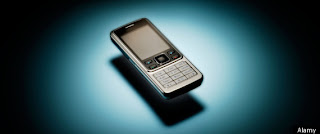
Filthy Phones: one In 6 cellular mobile phones Have Traces Of E. Coli Bacteria
About one in six cellphones tested in the U.K. had traces of E. coli bacteria from fecal matter, a new study released for Global Handwashing Day suggests.
Researchers from the London School of Hygiene & Tropical Medicine and Queen Mary, University of London travelled to 12 cities in Britain, took 390 samples from cellphones and hands and then analyzed the samples in the lab to record the type and number of germs.
The findings included:
 - Although 95 per cent of people said they washed their hands with soap where possible, 92 per cent of phones and 82 per cent of hands had bacteria on them.
- 16 per cent of hands and 16 per cent of phones were found to harbour E. coli bacteria that are associated with stomach upsets.
- Those who had bacteria on their hands were three times as likely to have bacteria on their phones.
"The mobile phone is a lovely area for some of the bacteria that we actually started to grow," said Dr. Ron Cutler of the London School of Hygiene & Tropical Medicine.
"As you speak on your phone too much, it heats up."
Fecal bacteria can survive on hands and surfaces for hours, especially in warmer temperatures away from sunlight; it is easily transferred by touch to door handles, food and cellphones, the researchers said.
If ingested, E.coli can cause diarrhea, extreme abdominal cramping and pain, nausea and vomiting, and in extreme cases, death.
A strain of E. coli O157 was implicated in a fatal outbreak of food poisoning in Germany in June.
Cleaning and phones
Public health experts advise people to wash their hands carefully after using the washroom.
Handwashing tips include:
- Take time to wash properly — long enough the sing the Happy birthday song twice.
- Remove jewelry.
- Wash both the front and back of hands.
- Scrub fingers including under fingernails.
- Use soap and water.
In Calgary, Kevin Wolf was an eager iPhone enthusiast waiting in line for a new model.
"I bet you a lot of people use their phones in the bathroom," Wolf said when learning of the British findings. "That's really gross. Thanks for putting that in my mind."
Farther down the line, the results didn't seem to bother Joe Eisenlohr.
"As far as I am concerned, probably everything in the world has fecal matter on it. Just wash your hands and don't put things in your mouth I guess."
Besides handwashing, CBC medical specialist Dr. Karl Kabasele suggested keeping cellphones and workstations clean by wiping them down with solutions that contain at least 60 per cent alcohol to cut down on the spread of germs.
Every year, 3.5 million children under the age of five are killed by pneumonia and diarrheal diseases that can be prevented by handwashing, the researchers noted.
Global Handwashing Day, held on Oct. 15 every year, aims to make handwashing with soap an automatic behaviour.
The coalition behind the awareness campaign includes GlaxoSmithKline, Initial Washroom Solutions, London School of Hygiene & Tropical Medicine, Sanofi Pasteur MSD, School Councils UK, Queen Mary, University of London, The Ideas Foundation and Wellcome Trust.
Researchers from the London School of Hygiene & Tropical Medicine and Queen Mary, University of London travelled to 12 cities in Britain, took 390 samples from cellphones and hands and then analyzed the samples in the lab to record the type and number of germs.
The findings included:
- 16 per cent of hands and 16 per cent of phones were found to harbour E. coli bacteria that are associated with stomach upsets.
- Those who had bacteria on their hands were three times as likely to have bacteria on their phones.
"The mobile phone is a lovely area for some of the bacteria that we actually started to grow," said Dr. Ron Cutler of the London School of Hygiene & Tropical Medicine.
"As you speak on your phone too much, it heats up."
Fecal bacteria can survive on hands and surfaces for hours, especially in warmer temperatures away from sunlight; it is easily transferred by touch to door handles, food and cellphones, the researchers said.
If ingested, E.coli can cause diarrhea, extreme abdominal cramping and pain, nausea and vomiting, and in extreme cases, death.
A strain of E. coli O157 was implicated in a fatal outbreak of food poisoning in Germany in June.
Cleaning and phones
Public health experts advise people to wash their hands carefully after using the washroom.
Handwashing tips include:
- Take time to wash properly — long enough the sing the Happy birthday song twice.
- Remove jewelry.
- Wash both the front and back of hands.
- Scrub fingers including under fingernails.
- Use soap and water.
In Calgary, Kevin Wolf was an eager iPhone enthusiast waiting in line for a new model.
"I bet you a lot of people use their phones in the bathroom," Wolf said when learning of the British findings. "That's really gross. Thanks for putting that in my mind."
Farther down the line, the results didn't seem to bother Joe Eisenlohr.
"As far as I am concerned, probably everything in the world has fecal matter on it. Just wash your hands and don't put things in your mouth I guess."
Besides handwashing, CBC medical specialist Dr. Karl Kabasele suggested keeping cellphones and workstations clean by wiping them down with solutions that contain at least 60 per cent alcohol to cut down on the spread of germs.
Every year, 3.5 million children under the age of five are killed by pneumonia and diarrheal diseases that can be prevented by handwashing, the researchers noted.
Global Handwashing Day, held on Oct. 15 every year, aims to make handwashing with soap an automatic behaviour.
The coalition behind the awareness campaign includes GlaxoSmithKline, Initial Washroom Solutions, London School of Hygiene & Tropical Medicine, Sanofi Pasteur MSD, School Councils UK, Queen Mary, University of London, The Ideas Foundation and Wellcome Trust.
Thursday, October 6, 2011
iPhone 5 Concept Leaked Expected Design
iPhone 5 Concept Leaked Expected Design : Apple’s iPhone 5 was originally said to have come in June 2011 but it seems it has been delayed. Will the 5th Gen Apple iPhone have slight change design from that of iPhone 4 or Completely modified design? Only time can tell.
But most of the web designers are already busy in estimating the design. We found few interesting looking images and we have selected to share with our audience. So have a look at what the internet community thinks iPhone 5 will be like…
iPhone 5 Concept Leaked Expected Design

But most of the web designers are already busy in estimating the design. We found few interesting looking images and we have selected to share with our audience. So have a look at what the internet community thinks iPhone 5 will be like…
iPhone 5 Concept Leaked Expected Design

Wednesday, October 5, 2011
Apple CEO Steve jobs has died
Steve Jobs, who built the world's most valuable technology company by creating devices that changed how people use electronics and revolutionised the computer, music and mobile phone industries, died. He was 56.
 Jobs, who resigned as Apple chief executive officer on August 24, 2011, the Cupertino, California-based company said today. He was diagnosed in 2003 with a neuroendocrine tumour, a rare form of pancreatic cancer, and had a liver transplant in 2009. Apple disclosed Jobs's passing in a statement.
Jobs embodied the Silicon Valley entrepreneur. He was a long-haired counterculture technophile who dropped out of college and started a computer company in his parents' garage on April Fool's Day, 1976. He had no formal technical training and no real business experience.
What he had instead was an appreciation of technology's elegance and a notion that computers could be more than a hobbyist's toy or a corporation's workhorse. These machines could be indispensable tools. A computer could be, he often said, "a bicycle for our minds." He was right - owing largely to a revolution he started.
Visionary to virtuoso
On his watch, Apple came to dominate the digital age, first through the creation of the Macintosh computer and later through the iPod digital music player, the iPhone wireless handset and more recently, the iPad tablet.

With each product, Jobs confronted new adversaries - from International Business Machines Corp. in computers to Microsoft in operating systems, to Sony in music players and Google in mobile software.
And Jobs would prove himself not just a techie visionary, but the virtuoso executive who built the world's second-most valuable company after Exxon Mobil.
The opening act of Jobs's professional ascent stretched from 1976 to 1984. He scored his first hit with the Apple II computer, a device that resonated with schools and some consumers and small businesses, and made Apple an alluring alternative to IBM, then the world's largest computer maker. Apple had its initial public offering in 1980 and the graphical Macintosh was born just over three years later.
Jobs, who resigned as Apple chief executive officer on August 24, 2011, the Cupertino, California-based company said today. He was diagnosed in 2003 with a neuroendocrine tumour, a rare form of pancreatic cancer, and had a liver transplant in 2009. Apple disclosed Jobs's passing in a statement.Jobs embodied the Silicon Valley entrepreneur. He was a long-haired counterculture technophile who dropped out of college and started a computer company in his parents' garage on April Fool's Day, 1976. He had no formal technical training and no real business experience.
What he had instead was an appreciation of technology's elegance and a notion that computers could be more than a hobbyist's toy or a corporation's workhorse. These machines could be indispensable tools. A computer could be, he often said, "a bicycle for our minds." He was right - owing largely to a revolution he started.
Visionary to virtuoso
On his watch, Apple came to dominate the digital age, first through the creation of the Macintosh computer and later through the iPod digital music player, the iPhone wireless handset and more recently, the iPad tablet.
With each product, Jobs confronted new adversaries - from International Business Machines Corp. in computers to Microsoft in operating systems, to Sony in music players and Google in mobile software.
And Jobs would prove himself not just a techie visionary, but the virtuoso executive who built the world's second-most valuable company after Exxon Mobil.
The opening act of Jobs's professional ascent stretched from 1976 to 1984. He scored his first hit with the Apple II computer, a device that resonated with schools and some consumers and small businesses, and made Apple an alluring alternative to IBM, then the world's largest computer maker. Apple had its initial public offering in 1980 and the graphical Macintosh was born just over three years later.
Subscribe to:
Posts (Atom)